
Important: No-upfront-cost options may be available, subject to eligibility and availability.
Are Solar Panels Worth It in Georgia?
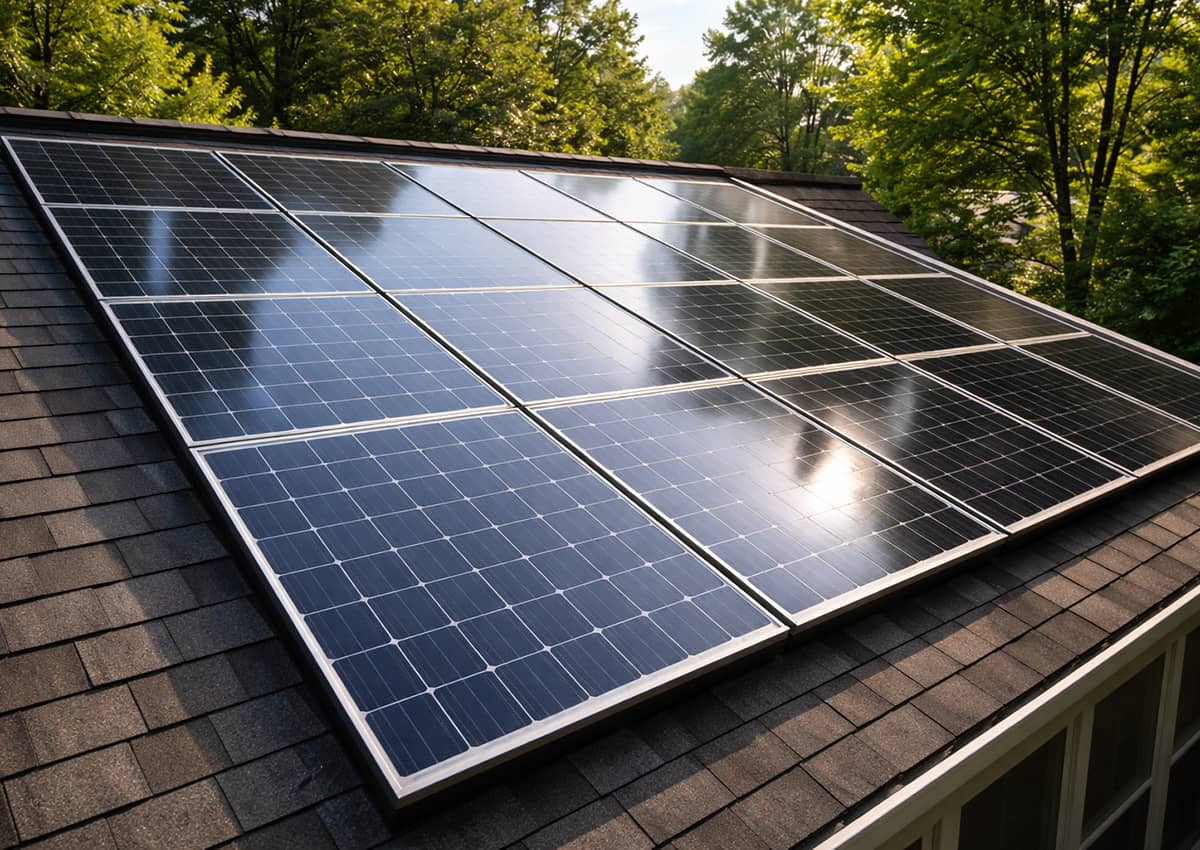
Solar panels in Georgia typically deliver strong returns with 8-12 year payback periods and $25,000-$45,000 in lifetime savings. This comprehensive analysis examines ROI, factors affecting value, and when solar makes sense for Georgia homeowners.
Check if you qualify for $0-down solar in Georgia
Get matched with vetted local installers. No obligation, free personalized quotes.
Key Takeaways
- 1Solar panels in Georgia typically pay for themselves in 8-12 years through energy savings
- 2Average 25-year savings range from $25,000-$45,000 for Georgia homeowners
- 3Federal tax credit (30%) plus Georgia state credit (up to $2,500) significantly improve ROI
- 4Georgia's 200+ sunny days per year provide excellent solar production potential
- 5Property value increases by approximately 4.1% with solar installation
Financial Returns on Solar in Georgia
For most Georgia homeowners, solar panels are a worthwhile investment that delivers substantial long-term financial returns. The typical payback period ranges from 8-12 years, after which all energy savings go directly into your pocket for the remaining life of the system (typically 25-30 years).
$25,000-$45,000
Average savings over 25 years
Based on typical energy usage, electricity rates, and system size for Georgia homes.
8-12 Years
Time to recover initial investment
After payback, enjoy 13-17+ years of essentially free electricity.
Factors That Impact Solar Value in Georgia
Electricity Rates
Georgia's average electricity rate of $0.14-$0.16 per kWh makes solar highly competitive. As utility rates continue to rise (historically 2-3% annually), your locked-in solar costs become increasingly valuable.
Solar Production Potential
With 200+ sunny days per year and strong solar irradiance, Georgia offers excellent conditions for solar energy production. Most systems generate 1,100-1,400 kWh per year per installed kW.
Available Incentives
The 30% federal tax credit ($4,200-$7,800 for average systems) combined with Georgia's state tax credit (up to $2,500) significantly reduces your net investment and improves ROI.
Property Value
Studies show homes with solar panels sell for approximately 4.1% more than comparable homes without solar. For a $300,000 home, that's an additional $12,300 in resale value.
Energy Independence
Beyond financial returns, solar provides protection from rising utility rates and power outages (when paired with battery storage), plus environmental benefits through reduced carbon emissions.
Break-Even Analysis: When Do You Start Saving?
Understanding your break-even point helps you visualize when solar starts putting money back in your pocket. Here's how it typically works for Georgia homeowners:
System Cost (6kW average)
$18,000
After Federal & State Tax Credits
$10,700
Annual Electricity Savings
$1,100-$1,400
Break-Even Timeline
8-10 years
Years 11-25 (After Break-Even)
$16,500-$21,000
Pure profit from energy savings
When Solar Might NOT Be Worth It
While solar is a great investment for most Georgia homeowners, there are situations where it may not make financial sense:
If your roof is heavily shaded by trees or buildings for most of the day, solar production will be significantly reduced, extending payback periods and reducing lifetime savings.
If your monthly electric bill is under $75, the savings from solar may not justify the investment. Solar works best for homes with moderate to high electricity consumption.
If you plan to move within 5-7 years, you may not stay in your home long enough to reach the break-even point, though solar does increase property value and can be a selling point.
If your roof needs replacement within the next few years, handle that first. Removing and reinstalling panels adds $2,000-$5,000 in extra costs.
Maximizing Your Solar Investment
To get the most value from solar panels in Georgia, consider these strategies:
Install a system sized to match 80-100% of your annual electricity usage. Oversizing can reduce ROI due to limited compensation for excess production under Georgia's net metering policies.
Ensure you claim both the 30% federal tax credit and Georgia's state tax credit (up to $2,500). Together, these can reduce your net cost by 35-40%.
Solar loans provide the best ROI since you own the system and keep all tax credits. Compare rates from multiple lenders to minimize interest costs over the loan term.
Compare at least 3-5 quotes from reputable installers. Prices can vary by $0.50-$1.00 per watt, which translates to $3,000-$6,000 in savings on a typical system.
Solar Loan vs Lease vs PPA: Quick Comparison
| Feature | Solar Loan | Solar Lease | PPA |
|---|---|---|---|
| Upfront Cost | $0 | $0 | $0 |
| Own the System | |||
| 30% Tax Credit | |||
| Monthly Savings | Highest (after payoff) | Moderate | Moderate |
| Maintenance | Your responsibility | Included | Included |
| Home Value Impact | Increases value | Minimal | Minimal |
| Contract Length | 5-25 years | 15-25 years | 15-25 years |
| Best For | Long-term homeowners | Low maintenance preference | Pay per kWh preference |
Ready to see your savings potential?
Get a free, no-obligation quote from top-rated installers in Georgia.
The Bottom Line
- "Free" solar panels aren't technically free, but $0-down options make solar accessible without upfront costs
- Georgia homeowners can save significantly with the 30% federal tax credit and net metering
- Compare multiple quotes to find the best deal for your specific situation
Frequently Asked Questions
Sources & References
- • U.S. Department of Energy - Energy.gov
- • Internal Revenue Service (IRS) - Solar Tax Credit Guidelines
- • National Renewable Energy Laboratory (NREL)
- • Database of State Incentives for Renewables & Efficiency (DSIRE)
- • Georgia Public Utilities Commission
You May Also Like
Ready to Go Solar in Georgia?
Get free, personalized solar quotes from vetted Georgia installers. No commitment required.