
Important: No-upfront-cost options may be available, subject to eligibility and availability.
Solar Financing Options in Georgia: Loans, Leases & PPAs Compared
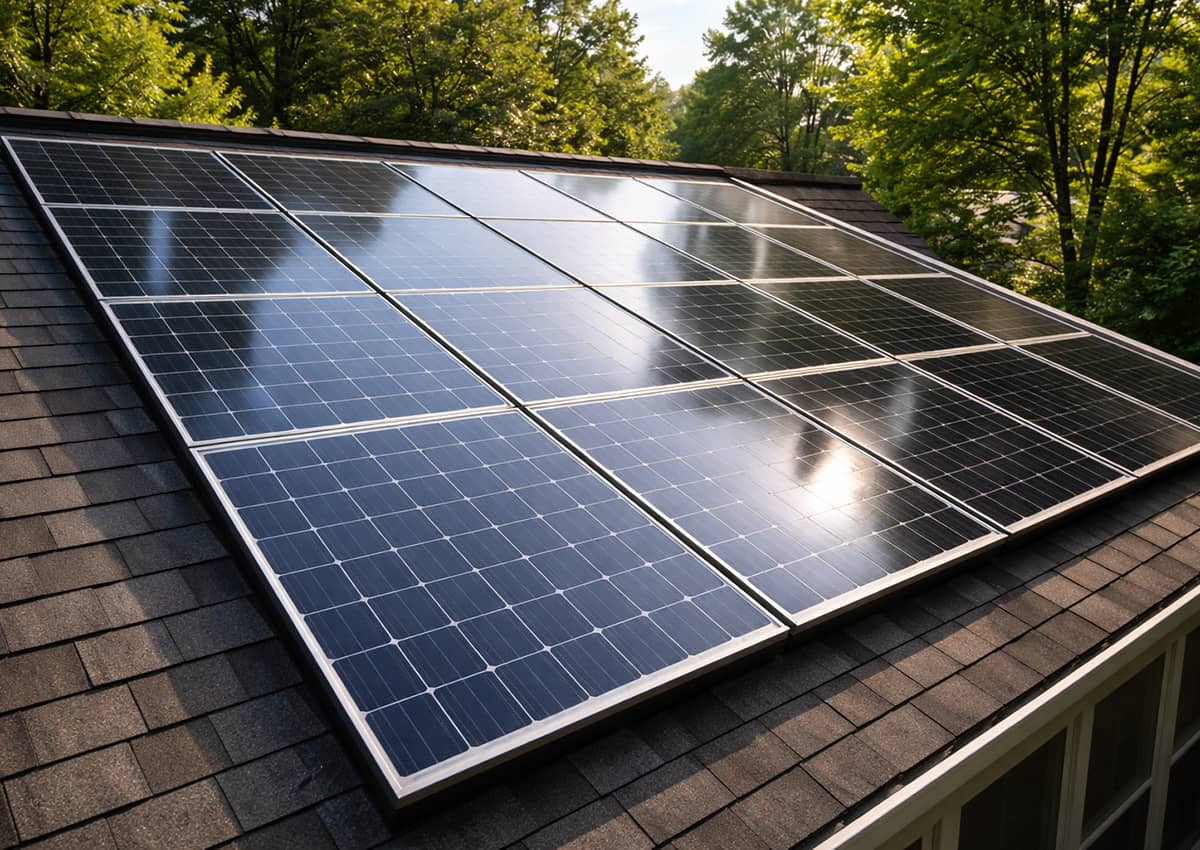
Understanding your solar financing options is crucial to maximizing your savings and choosing the right path for your home. In Georgia, homeowners have three main ways to go solar: solar loans, solar leases, and Power Purchase Agreements (PPAs).
Each option has distinct ownership implications, upfront costs, and long-term benefits. This comprehensive guide breaks down all three financing methods to help you make an informed decision about which option delivers the best value for your situation.
Check if you qualify for $0-down solar in Georgia
Get matched with vetted local installers. No obligation, free personalized quotes.
Key Takeaways
- 1Solar loans offer system ownership and access to the full 30% federal tax credit ($4,200-$7,800 value)
- 2Leases and PPAs require $0 upfront but you don't own the system or qualify for tax credits
- 3System owners save $25,000-$45,000+ over 25 years, while lease/PPA savings are typically $10,000-$15,000
- 4Loans provide the best long-term ROI despite monthly payments during the payback period
- 5Your credit score, home equity, and cash flow determine which financing option works best for you
Solar Loans: Own Your System
A solar loan allows you to finance your solar panel system and own it outright from day one. You make monthly loan payments instead of paying cash upfront, but you retain all the financial benefits of ownership including tax credits and incentives.
How Solar Loans Work
- Ownership from day 1: You own the solar system immediately, even while making payments
- $0 down available: Many lenders offer zero-down solar loans, though a down payment reduces your monthly payment
- Keep all tax credits: You claim the full 30% federal tax credit ($4,200-$7,800) plus up to $2,500 Georgia state credit
- Monthly payments: Typically $100-$200/month for 10-25 years, depending on system size and terms
- All savings are yours: After payback (8-12 years), you enjoy decades of free electricity
Pros of Solar Loans
- Maximum long-term savings: $25,000-$45,000+ over 25 years
- Access to federal and state tax credits worth $6,700-$10,300
- Increases home value by $15,000-$25,000 on average
- No lease buyout required when you sell your home
- You control maintenance and upgrades
Cons of Solar Loans
- Monthly payments during payback period (typically 8-12 years)
- Responsible for system maintenance and repairs
- Must have sufficient tax liability to claim credits in year 1
- Credit check required (typically 650+ FICO score needed)
Example Solar Loan Scenario
8 kW system costs $24,000. With a $0-down solar loan at 5.99% for 20 years, your monthly payment is ~$168. You claim $7,200 in federal tax credits (30%) plus $2,500 Georgia credit. Your net cost is $14,300 over 20 years, but you save $35,000+ in electricity costs, netting $20,700 in profit over 25 years.
Solar Leases: Low Upfront Cost, No Ownership
A solar lease allows you to use solar panels installed on your roof without owning them. You pay a fixed monthly fee to the leasing company, which owns and maintains the system. In exchange, you benefit from lower electricity bills without any upfront investment.
How Solar Leases Work
- $0 upfront cost: No down payment required; solar company installs the system for free
- Fixed monthly lease payment: Typically $75-$150/month for the lease term (usually 20-25 years)
- Solar company keeps tax credits: They own the system, so they claim all incentives
- Maintenance included: The leasing company handles all repairs and maintenance
- Annual escalator: Lease payments typically increase 1-3% per year
Pros of Solar Leases
- Zero upfront investment required
- Immediate electricity bill savings
- No maintenance responsibilities
- Fixed, predictable monthly payment
- Easier approval than loans (minimal credit requirements)
Cons of Solar Leases
- Lower lifetime savings: typically $10,000-$15,000 vs $25,000-$45,000 with ownership
- You don't qualify for tax credits or incentives
- Lease payments increase annually (escalator clause)
- Complicates home sales (buyer must assume lease or you buy it out)
- System doesn't add value to your home
Example Solar Lease Scenario
8 kW system with $0 down and $120/month lease payment (2.9% annual escalator). Over 25 years, you pay $42,000 in lease payments but save $55,000 on electricity, netting $13,000 in savings—significantly less than the $20,700+ you'd save with a loan.
Power Purchase Agreements (PPAs): Pay Per kWh
A Power Purchase Agreement (PPA) is similar to a solar lease, but instead of paying a fixed monthly fee, you pay only for the electricity the system produces at a predetermined rate (per kilowatt-hour). The solar company owns, installs, and maintains the system.
How PPAs Work
- $0 upfront cost: Solar company installs and owns the system
- Pay per kWh produced: Typically $0.10-$0.13 per kWh (below Georgia's average $0.13/kWh utility rate)
- Variable monthly bills: You only pay for what the system generates
- Annual rate escalator: PPA rates typically increase 2-3% per year
- Solar company keeps incentives: They claim all tax credits since they own the system
Pros of PPAs
- Zero upfront investment
- Immediate savings on electricity (typically 10-20% below utility rates)
- Only pay for actual production (no payment if system doesn't produce)
- Maintenance and repairs included
- No credit check required (easiest financing to qualify for)
Cons of PPAs
- Lowest lifetime savings of all financing options
- You don't own the system or get tax benefits
- Variable monthly bills (weather dependent)
- PPA rates increase annually
- Complicates home sales (lease transfer required)
- May pay more than utility rates if escalator outpaces utility increases
Example PPA Scenario
8 kW system produces ~10,000 kWh/year. At $0.11/kWh PPA rate (vs $0.13 utility rate), you save ~$200/year initially. With a 2.9% escalator, lifetime savings are approximately $8,000-$12,000 over 25 years—the lowest of all financing options.
Side-by-Side Financing Comparison
| Feature | Solar Loan | Solar Lease | PPA |
|---|---|---|---|
| Upfront Cost | $0 down available | $0 down | $0 down |
| System Ownership | You own it | Solar company owns | Solar company owns |
| Federal Tax Credit (30%) | You claim it | Solar company keeps | Solar company keeps |
| Monthly Payment | Fixed loan payment | Fixed lease payment | Variable (per kWh) |
| Maintenance | Your responsibility | Company handles | Company handles |
| 25-Year Savings | $25,000-$45,000+ | $10,000-$15,000 | $8,000-$12,000 |
| Home Value Impact | Adds $15,000-$25,000 | No added value | No added value |
| When Selling Home | System transfers with home | Buyer assumes lease | Buyer assumes PPA |
| Credit Check | Yes (650+ FICO) | Minimal | None typically |
Which Financing Option Is Right for You?
Choose a Solar Loan If:
- You want maximum long-term savings and ROI
- You have sufficient tax liability to claim credits (earn $50,000+/year typically)
- Your credit score is 650 or higher
- You plan to stay in your home for 8+ years
- You're comfortable with system ownership responsibilities
Choose a Solar Lease If:
- You want immediate savings with zero upfront cost
- You prefer predictable fixed monthly payments
- You don't want maintenance responsibilities
- Your credit score is below 650
- You want solar but can't utilize tax credits
Choose a PPA If:
- You want the simplest approval process (no credit check)
- You prefer paying only for actual production
- You want immediate bill savings with zero risk
- You're renting or may move within 5-10 years
- You don't qualify for loans or leases
Bottom Line Recommendation
If you qualify, a solar loan delivers the best financial outcome—2-3x more savings than leases or PPAs. However, if you can't claim tax credits or prefer zero responsibility, a lease offers solid savings with simplicity. PPAs work best for those who want the absolute easiest path to solar with minimal commitment.
Georgia-Specific Financing Programs
Georgia offers several programs and incentives that can enhance your solar financing options:
Federal Investment Tax Credit (ITC)
The 30% federal solar tax credit applies to all financed solar systems where you maintain ownership. This credit reduces your federal tax liability dollar-for-dollar and is worth $4,200-$7,800 for typical Georgia residential systems.
Georgia State Solar Tax Credit
Georgia offers an additional state tax credit worth up to $2,500 for residential solar installations. Combined with the federal credit, system owners can receive $6,700-$10,300 in total tax benefits.
Net Metering
Georgia Power and most Georgia utilities offer net metering, which credits your account for excess solar energy you send back to the grid. This enhances the value of your solar investment regardless of financing method.
Property Tax Exemption
Solar systems in Georgia are exempt from property tax assessments, meaning your solar installation won't increase your property taxes even though it adds value to your home.
Solar Loan vs Lease vs PPA: Quick Comparison
| Feature | Solar Loan | Solar Lease | PPA |
|---|---|---|---|
| Upfront Cost | $0 | $0 | $0 |
| Own the System | |||
| 30% Tax Credit | |||
| Monthly Savings | Highest (after payoff) | Moderate | Moderate |
| Maintenance | Your responsibility | Included | Included |
| Home Value Impact | Increases value | Minimal | Minimal |
| Contract Length | 5-25 years | 15-25 years | 15-25 years |
| Best For | Long-term homeowners | Low maintenance preference | Pay per kWh preference |
Ready to see your savings potential?
Get a free, no-obligation quote from top-rated installers in Georgia.
The Bottom Line
- "Free" solar panels aren't technically free, but $0-down options make solar accessible without upfront costs
- Georgia homeowners can save significantly with the 30% federal tax credit and net metering
- Compare multiple quotes to find the best deal for your specific situation
Frequently Asked Questions
Sources & References
- • U.S. Department of Energy - Energy.gov
- • Internal Revenue Service (IRS) - Solar Tax Credit Guidelines
- • National Renewable Energy Laboratory (NREL)
- • Database of State Incentives for Renewables & Efficiency (DSIRE)
- • Georgia Public Utilities Commission
You May Also Like
Solar Incentives in Georgia
Learn about all available solar incentives and tax credits in Georgia
Cost of Solar Panels in Georgia
Understand typical solar installation costs and pricing
Are Solar Panels Worth It in Georgia?
Calculate if solar makes financial sense for your home
How Do Free Solar Panels Work?
Understand no-upfront-cost solar and what 'free' really means
Ready to Go Solar in Georgia?
Get free, personalized solar quotes from vetted Georgia installers. No commitment required.