
Important: No-upfront-cost options may be available, subject to eligibility and availability.
How Do Free Solar Panels Work in Georgia?
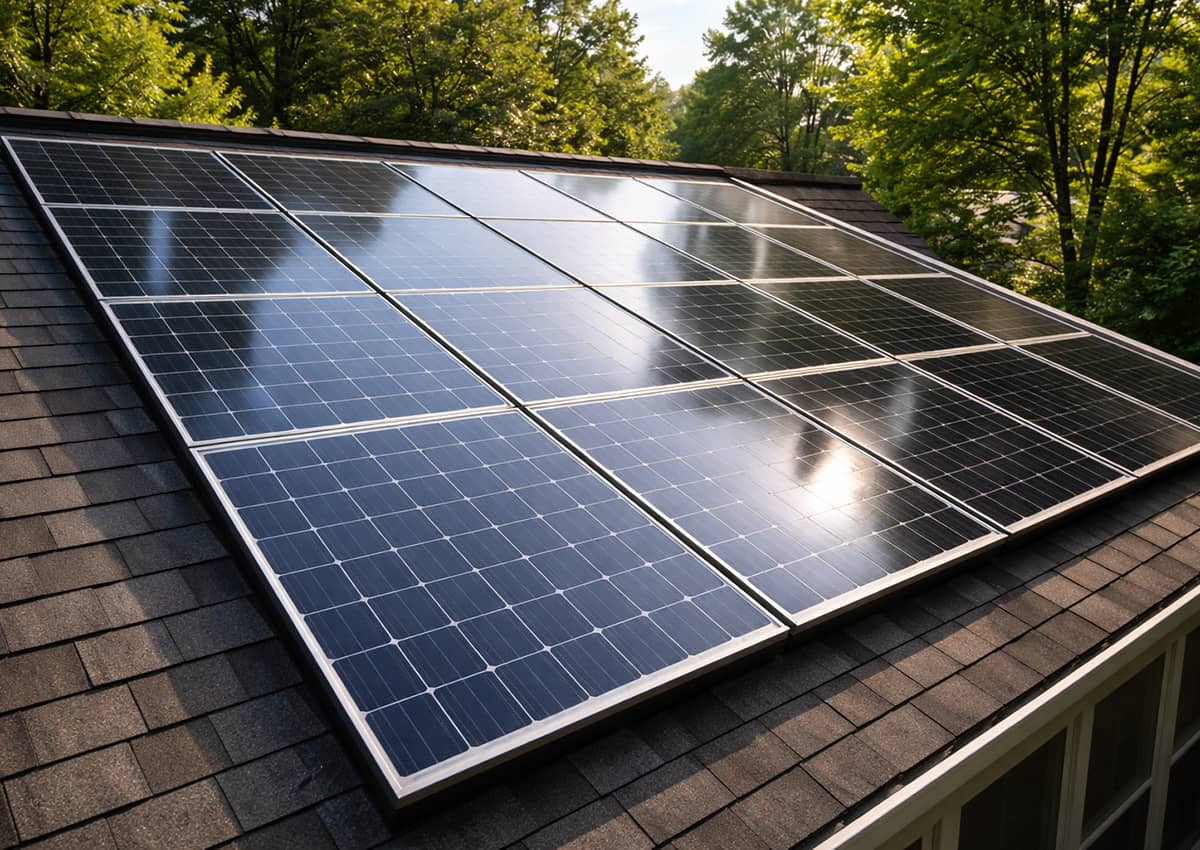
When you see ads for "free solar panels" in Georgia, here's what they actually mean in 2026: you can install a solar system with $0 upfront cost—not that you'll own the panels for free. The key decision is whether you want to own the system (and access local and utility programs worth thousands in savings) or have a solar company own it while you pay for the power it produces.
This guide explains the three main $0-down solar paths available to Georgia homeowners, who qualifies, and which option typically provides the best long-term return on investment.
Check if you qualify for $0-down solar in Georgia
Get matched with vetted local installers. No obligation, free personalized quotes.
Key Takeaways
- 1"Free solar panels" means $0-upfront installation, not free ownership—you'll either own the system (via a $0-down loan) or pay to use it (lease/PPA)
- 2Solar loans with $0-down let you own the system and claim the full 30% federal tax credit + Georgia state credit (up to $2,500)
- 3Solar leases and PPAs require no upfront cost, but the solar company keeps all tax credits and incentives
- 4Ownership through loans typically saves $8,200–$13,000+ more over 25 years compared to leases or PPAs
- 5The best option depends on your tax liability, credit score, long-term plans, and whether you want to maximize ROI
- 6Georgia's incentives (federal ITC, GA state credit, net metering, property tax exemption) make ownership especially valuable
What "Free Solar Panels" Actually Means in 2025
When companies advertise "free solar panels," they're referring to $0-upfront-cost installation options—not free ownership. You'll still pay for solar, but the question is how: through ownership (via a $0-down loan) or by renting/buying the power (via a lease or power purchase agreement).
Important Clarification
"Free" solar is a marketing term for $0-down installation financing. It doesn't mean you get free electricity forever or that there's no cost involved. The real question is: do you want to own the system and maximize your long-term savings, or rent it for lower immediate responsibility?
The Ownership Decision: The Key Factor
The most important decision when going solar in Georgia is who owns the system—you or the solar company. Ownership determines:
- Who claims the $8,500+ in combined federal (30%) and Georgia state tax credits
- Who benefits from net metering savings ($1,000–$1,600/year)
- Whether your electricity costs drop to near-zero after the system is paid off (typically 10-15 years)
- How much value is added to your home (owned systems increase home value by $15,000–$25,000; leases don't)
Option 1: $0-Down Solar Loan (Most Popular for Ownership)
A $0-down solar loan allows you to own your solar system from day one without paying anything upfront. You finance the full cost of the system through a lender, make monthly payments (often lower than your old electric bill), and own the equipment outright. This is the most popular path for Georgia homeowners who want to maximize long-term savings.
Best Long-Term ROI: $8,200–$13,000+ in Incentives
Because you own the system, you claim the federal 30% tax credit ($6,000 typical), Georgia state credit (up to $2,500), and property tax exemption. These incentives can be used to pay down your loan early or keep as savings.
How $0-Down Solar Loans Work
- 1Get approved for a solar loan (typical rates: 3-8% APR for 10-25 year terms)
- 2System is installed with $0 out of pocket—the loan covers the full cost
- 3You own the system immediately and start generating power
- 4Claim $8,500+ in federal + state tax credits when you file taxes (use to pay down loan or keep as savings)
- 5Make monthly loan payments for 10-25 years—once paid off, electricity is essentially free
Pros and Cons of Solar Loans
Pros
- You own the system and claim all incentives ($8,200–$13,000+ in GA)
- Monthly payments often lower than your old electric bill
- After loan is paid off (10-25 years), electricity is virtually free
- Increases home value by $15,000–$25,000
- Protects against rising utility rates for 25+ years
Cons
- You're responsible for maintenance and repairs (though panels have 25-year warranties)
- Requires sufficient tax liability to fully benefit from tax credits in year 1-2
- Best loan terms typically require good credit (650+ FICO)
- More complex than lease/PPA if you plan to move within 5-7 years
Why Loans Are Popular in Georgia
Georgia's combined federal and state incentives make solar loans extremely attractive. With $8,500+ in tax credits alone (on a typical $20,000 system), many homeowners use these credits to pay down their loan balance early, reducing total interest and accelerating their path to $0 energy costs. Over 25 years, loan ownership typically saves $8,200–$13,000+ more than leases or PPAs.
Solar Loan vs Lease vs PPA: Quick Comparison
| Feature | Solar Loan | Solar Lease | PPA |
|---|---|---|---|
| Upfront Cost | $0 | $0 | $0 |
| Own the System | |||
| 30% Tax Credit | |||
| Monthly Savings | Highest (after payoff) | Moderate | Moderate |
| Maintenance | Your responsibility | Included | Included |
| Home Value Impact | Increases value | Minimal | Minimal |
| Contract Length | 5-25 years | 15-25 years | 15-25 years |
| Best For | Long-term homeowners | Low maintenance preference | Pay per kWh preference |
Ready to see your savings potential?
Get a free, no-obligation quote from top-rated installers in Georgia.
The Bottom Line
- "Free" solar panels aren't technically free, but $0-down options make solar accessible without upfront costs
- Georgia homeowners can save significantly with the 30% federal tax credit and net metering
- Compare multiple quotes to find the best deal for your specific situation
Frequently Asked Questions
Sources & References
- • U.S. Department of Energy - Energy.gov
- • Internal Revenue Service (IRS) - Solar Tax Credit Guidelines
- • National Renewable Energy Laboratory (NREL)
- • Database of State Incentives for Renewables & Efficiency (DSIRE)
- • Georgia Public Utilities Commission
You May Also Like
Georgia Solar Incentives & Tax Credits
Learn about federal and state solar incentives available to Georgia homeowners
Cost of Solar Panels in Georgia
Complete breakdown of solar installation costs and savings in Georgia
Solar Financing in Georgia
Compare solar financing options including loans, leases, and PPAs
Ready to Go Solar in Georgia?
Get free, personalized solar quotes from vetted Georgia installers. No commitment required.